
Best price guaranteed
Always a Perfect Design
100% satisfaction
Next Delivery is May 21, 2025
Next Delivery is May 21, 2025
Understanding paper sizes is essential for any print project. This guide covers standard international and US paper sizes, as well as information about paper weights and finishes.
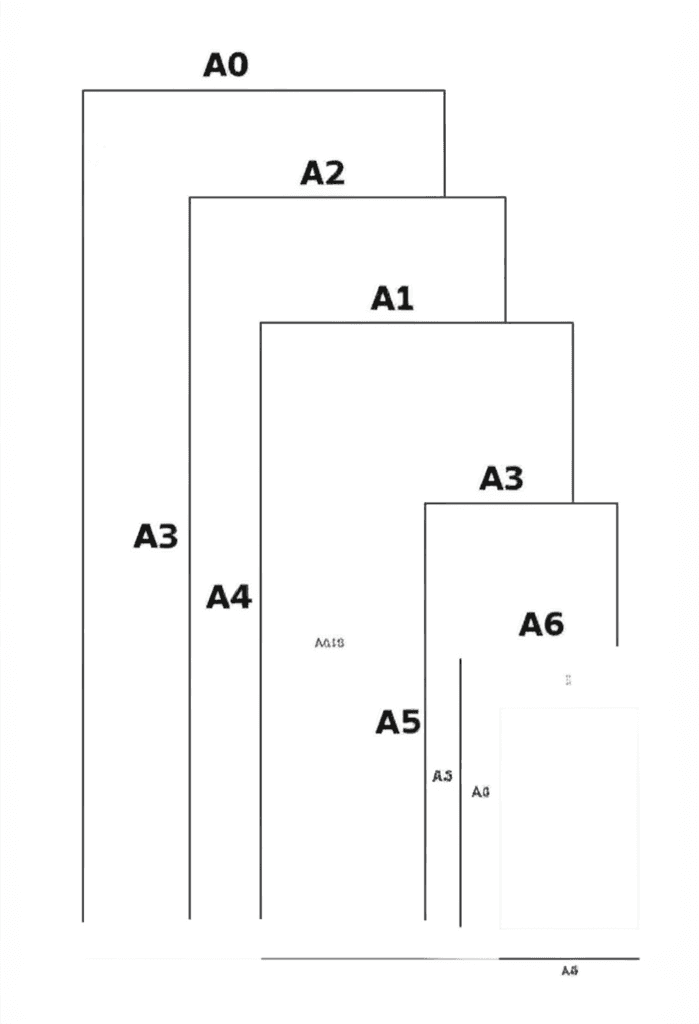
The ISO 216 standard defines the A, B, and C series of paper sizes. The A series is the most commonly used for general printing and stationery.
| Size | Dimensions (mm) | Dimensions (inches) | Common Uses |
|---|---|---|---|
| A0 | 841 × 1189 mm | 33.1 × 46.8 in | Posters, large technical drawings |
| A1 | 594 × 841 mm | 23.4 × 33.1 in | Posters, flip charts, technical drawings |
| A2 | 420 × 594 mm | 16.5 × 23.4 in | Small posters, diagrams, large photos |
| A3 | 297 × 420 mm | 11.7 × 16.5 in | Ledgers, charts, small posters |
| A4 | 210 × 297 mm | 8.3 × 11.7 in | Letters, magazines, forms, catalogs |
| A5 | 148 × 210 mm | 5.8 × 8.3 in | Notepads, booklets, flyers |
| A6 | 105 × 148 mm | 4.1 × 5.8 in | Postcards, small books |
Each A size is exactly half the size of the previous one when folded parallel to the shorter sides.
| Size | Dimensions (inches) | Dimensions (mm) | Common Uses |
|---|---|---|---|
| Letter | 8.5 × 11 in | 216 × 279 mm | Standard business documents, letters |
| Legal | 8.5 × 14 in | 216 × 356 mm | Legal documents, contracts |
| Tabloid/Ledger | 11 × 17 in | 279 × 432 mm | Tabloid newspapers, posters |
| Junior Legal | 5 × 8 in | 127 × 203 mm | Notepads, small forms |
US Letter (8.5 × 11 in) is slightly wider and shorter than A4 (8.3 × 11.7 in). This difference can cause issues when printing documents created for different standards.
Paper weight is measured in grams per square meter (GSM). The higher the GSM, the thicker and more durable the paper.
Non-reflective finish that's easy to write on. Good for readability and professional documents.
Shiny, reflective finish that makes colors pop. Ideal for photos and vibrant marketing materials.
Middle ground between matte and glossy. Offers some shine without being too reflective.
Natural paper feel, absorbent and easy to write on. Good for stationery and letterheads.
Papers with various textures like linen, felt, or laid. Adds a tactile element to premium print products.
Standard size: 85 × 55 mm (3.35 × 2.17 in)
Recommended weight: 300-350 GSM
Popular finishes: Matte, Glossy, Spot UV, Soft-touch lamination
Common sizes: A6, A5, A4, DL (99 × 210 mm)
Recommended weight: 130-170 GSM
Popular finishes: Glossy, Matte, Uncoated
Common sizes: A3, A2, A1, A0
Recommended weight: 150-200 GSM
Popular finishes: Glossy, Satin
Common sizes: A4, A5, DL
Recommended weight: Cover: 250-300 GSM, Inside: 130-170 GSM
Popular finishes: Glossy, Matte, Silk
Standard size: A4 (210 × 297 mm)
Recommended weight: 90-120 GSM
Popular finishes: Uncoated, Watermarked
Common sizes: Custom, typically measured in meters
Recommended material: PVC, Mesh, Fabric
Popular finishes: Matte, Semi-gloss
Bleed is the area that extends beyond the final trim size of your printed piece. It's typically 3mm on all sides. Bleed is important because it ensures there are no white edges when the document is trimmed to its final size.
A4 (210 × 297 mm) is slightly narrower and taller than US Letter (216 × 279 mm). A4 is the standard in most countries, while US Letter is primarily used in North America.
Consider the purpose of your printed piece. Lightweight papers (80-120 GSM) are good for everyday documents, medium weights (130-200 GSM) for marketing materials, and heavyweight papers (250+ GSM) for premium products like business cards.
Yes, we offer custom paper sizes for most print products. Contact our customer service team with your specific requirements, and we'll help you determine the best options for your project.
Now that you understand paper sizes and weights, it's time to bring your print project to life. Our team is ready to help you choose the perfect specifications for your needs.